
Quick answer: A second warehouse becomes worth it when rising freight, slipping delivery promises, and recurring stockouts consistently point the same direction: the cost of staying single-location exceeds the cost of splitting. It's an economics decision, not a gut call, and success rests on four disciplines, allocation, real-time sync, order routing, and transfers.
Key Takeaways
- The trigger isn't one dramatic moment, it's when rising freight, slow delivery, and repeat stockouts all make single-location costlier than splitting.
- Multi-location management is four disciplines working as a system: allocation, real-time sync, order routing, and transfers, get one wrong and the others inherit the mess.
- Place A-movers in every warehouse but concentrate long-tail SKUs where they actually sell, with safety stock recalculated per location.
- A single real-time ledger is the fix for oversells and phantom stockouts; route orders by availability and proximity to shrink shipping zones.
- Stand it up in 30 days: Week 1 source of truth, Week 2 allocation, Week 3 routing, Week 4 a real transfer and review.
Running an entire ecommerce operation out of one stockroom is the simplest way to sell online, right up until it isn't. Freight creeps up, delivery promises slip, and a single disrupted region can empty your shelves overnight.
At some point a second warehouse stops being a "someday" idea and becomes the cheaper, faster way to serve the customers you already have. This guide walks through when that moment arrives, the signals that you've already passed it, what multi-location inventory management actually involves day to day, and how to stand up your second warehouse in the first 30 days.
When a Second Location Stops Being Optional
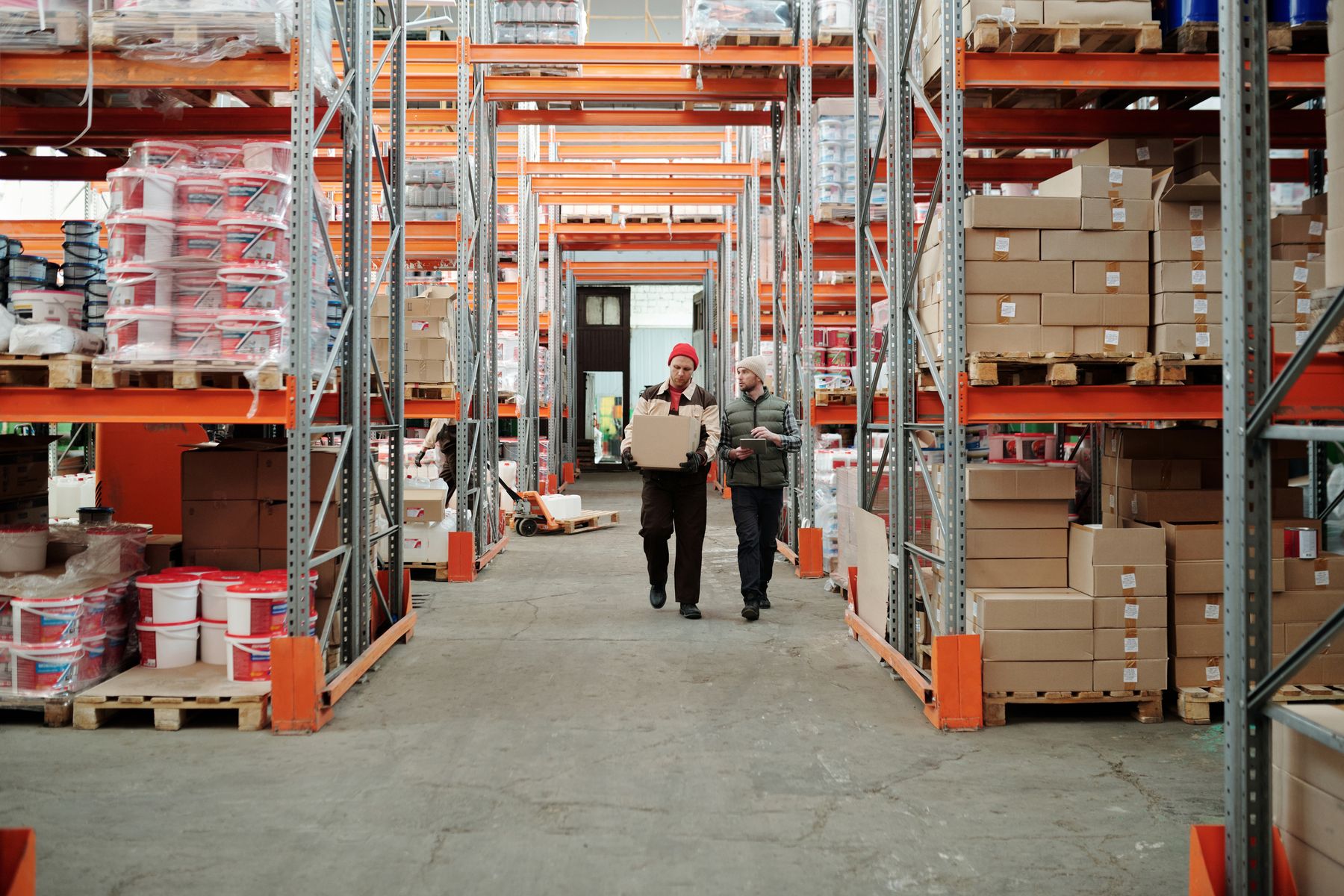
A second warehouse rarely announces itself with one dramatic moment. It's a stack of small frictions, a few extra dollars per distant order, a delivery date you keep apologizing for, a stockout that didn't have to happen, that finally outweighs the simplicity of running everything from one room.
You're not early to this idea. 44% of brands plan to add a fulfillment center in 2026, and 84% already lean on 3PLs to run them. The direction of travel is clear: more nodes, closer to demand.
Treat the decision as an economics question. When rising freight, slower delivery, and recurring stockouts all point the same way, the cost of staying single-location quietly exceeds the cost of splitting. Here's how to tell you've crossed that line.
The Signals That One Stockroom Can't Keep Up Anymore
The symptoms show up in your shipping bill, your shelves, and your support inbox before they ever show up in a strategy deck.
Transit costs and delivery promises start slipping
Ship every order from a single origin and distant customers cross more shipping zones, which inflates rates and lengthens lead time.
A one-location operation simply can't shorten that distance, the parcel always starts in the same place, no matter where the buyer is. When your average cost-to-ship and your promised delivery window both keep drifting the wrong way, geography is the cause.
Disruption keeps emptying your shelves
If you're absorbing repeated stockouts, the math is brutal. Global inventory distortion runs $1.73 trillion a year, about 6.5% of retail sales, and supply chain disruption is the single largest driver at $301 billion.
Splitting stock across regions is a direct hedge against that volatility: when one node is disrupted, another keeps selling.
You can't fully trust a single count
The third signal is quieter, the moment your channels and your shelf start disagreeing, and you find yourself manually reconciling counts. That friction only multiplies with a second location, which is why the systems below matter before you open one.
What Multi-Location Inventory Management Actually Involves

Multi-location inventory management is four distinct disciplines working together, not one stockroom's routine run twice. The rest of this guide is organized around them:
- Allocation, deciding how much of each SKU to hold in each warehouse, so stock sits where the orders actually originate.
- Real-time sync, keeping every location's count and every sales channel reading from one source of truth.
- Order routing, choosing, for each incoming order, which warehouse should ship it.
- Transfers, moving stock between warehouses without losing track of it in transit.
Get one of these wrong and the others inherit the mess: bad allocation forces expensive routing, weak sync causes oversells, sloppy transfers create phantom stock. Treated as a system, they compound the other way, each one makes the next cheaper and more accurate.
Deciding How Much of Each SKU to Stock Where
Splitting stock across locations only pays off if each unit lands where the order actually originates. Inventory allocation starts with one question: where is the demand, by SKU, by region?
Pull 6–12 months of order history and map it to geography. Your A-movers earn a presence in every warehouse; long-tail SKUs usually don't justify the holding cost of being everywhere.
Forecast by region, not just in aggregate
National demand forecasting hides the patterns that matter for stock placement. A SKU that sells evenly nationwide gets balanced; one with strong demand on a single coast gets weighted there.
This is where AI demand planning earns its keep, 76% of retailers using AI/ML demand planning reported positive results, and the gap between adopters and everyone else is real: AI adopters report 2.3x higher sales growth and 2.5x higher profit growth than peers.
And the pace of change is only accelerating:
IHL Group's research projects that the coming decade will bring technology advances rivaling 30 years of previous innovation in retail supply chain operations.
Set safety stock per location to avoid both failure modes
Stockouts and overstock are two sides of the same distortion, globally the gap splits roughly $1.2 trillion in out-of-stocks and $554 billion in overstock. Splitting inventory multiplies the risk because each location needs its own buffer.
To keep both buffers honest:
- Calculate safety stock per warehouse from that location's lead time and demand variability.
- Set per-location reorder points.
- Watch in-transit transfers so a regional dip triggers a rebalance, not an emergency reorder.
Per-location stock and reorder points are what a system like SalesChannelHub tracks, so the buffers stay honest as demand shifts.
Keeping Counts Synced Across Locations and Channels in Real Time

The fastest way to undo a good allocation is to let each location and each sales channel keep its own private count. Counts drift the moment they update separately instead of through one synced source of truth, and the result is both:
- Phantom stockouts, you have it, but a channel says you don't.
- Oversells, you sold it twice because two channels both thought it was available.
The fix is a single authoritative ledger that every location and channel reads from and writes to in near real time. When an order is placed, available-to-sell decrements everywhere at once, not on the next nightly batch. When a warehouse receives or transfers stock, the change propagates before the next order can be misrouted.
The closer that sync runs to real time, the smaller the window in which two buyers can claim the same unit. A platform like SalesChannelHub centralizes multi-location counts so the number a customer sees at checkout is the number actually on the shelf.
Order Routing: How the System Picks the Shipping Warehouse
Once stock sits in more than one location, every incoming order needs a decision: which warehouse ships it? That decision is order routing, and getting it right is what turns a second stockroom from a headache into leverage.
How order routing decides
Fulfillment routing evaluates each order against a few signals in priority order:
- Availability, does the location actually have every SKU in stock?
- Proximity, the system scores warehouses by distance to the buyer's address, because closer almost always means cheaper and faster.
- Rate shopping, most engines layer in rate shopping across carriers like FedEx and UPS, comparing live quotes so the cheapest compliant service wins rather than a hardcoded default.
Zones, regions, and split shipments
The real prize is shorter shipping zones. Routing an order to the nearest warehouse with stock keeps it inside fewer zones, which lowers cost and transit time. ShipBob reports that sellers using its Inventory Placement Program saw 15% fewer shipping zones and 16% more in-region fulfillment in 2025. In-region fulfillment is the goal; cross-country shipments are the tax you pay when placement is wrong.
When no single location holds the full order, the engine can issue a split shipment, sourcing items from two warehouses to avoid backordering one line. Splits raise total shipping spend, so good routing treats them as a fallback, not a default.
Moving Stock Between Warehouses Without Losing the Thread

A stock transfer is the moment inventory is most likely to slip off your books, counted at neither end while it rides on a truck. The fix is to treat every transfer as a tracked state, not a one-off event.
Track it as in-transit, not "gone"
When units leave the origin, decrement that location but don't credit the destination yet, move them to an in-transit status. Good in-transit tracking keeps those units on your balance sheet and visible to channel sync, so you neither oversell phantom stock nor quietly write it off as shrink.
A small visibility gap here is exactly how disruption turns into lost sales: stock that's invisible can't be sold or routed.
Close the loop with goods receipt and QC
Stock only truly lands when the destination runs a goods receipt:
- Scanning quantities against the transfer.
- Performing QC on condition.
- Flagging any shortfall.
Reconciliation then matches shipped versus received, and a targeted cycle count on the affected bins catches whatever the receipt missed. Systems that model per-location stock with in-transit tracking automate this handoff so the thread is never dropped between docks.
Where Multi-Warehouse Setups Break, and How to Stay Ahead
Most multi-warehouse problems aren't exotic. They're the same handful of failure modes, and each has a cheap preventive fix.
- Sync lag causes oversells. If counts reconcile on a batch instead of in real time, two channels sell the last unit. Stay ahead: make the central ledger the single source of truth and push decrements at order time, not overnight.
- Transfers vanish in transit. Stock decremented at the origin but never tracked to the destination becomes invisible, neither sellable nor reconciled. Stay ahead: enforce in-transit status on every transfer and require a goods receipt to close it.
- Slow SKUs get over-distributed. Putting long-tail items in every warehouse multiplies holding cost without improving delivery. Stay ahead: keep A-movers everywhere, but concentrate the long tail where it actually sells.
- Routing defaults to splits. A misconfigured engine backorders or splits orders it could have filled from one node. Stay ahead: prioritize availability and proximity, and treat split shipments as the exception.
- Safety stock is set once and forgotten. A buffer sized for one location's old demand goes stale as patterns shift. Stay ahead: recalculate per-location safety stock and reorder points from current lead time and demand variability.
Catching these early is far cheaper than discovering them through a stockout or a chargeback.
Your First 30 Days Running Two Warehouses

You don't need to solve all four disciplines at once. Sequence them so each week builds on the last.
- Week 1, Establish the source of truth. Cycle count both locations, load the counts into one central ledger, and connect every sales channel to it so available-to-sell reads from a single number.
- Week 2, Allocate the stock. Pull 6–12 months of order history, map demand by region, and place A-movers in both warehouses. Set per-location safety stock and reorder points from each site's lead time and demand variability.
- Week 3, Turn on order routing. Configure routing to prioritize availability and proximity, enable rate shopping across carriers, and define when a split shipment is allowed. Run test orders from several regions and confirm each lands at the nearest stocked warehouse.
- Week 4, Run a real transfer and review. Execute your first inter-warehouse transfer end to end: in-transit status out, goods receipt and QC in, reconciliation to close. Then review the month's shipping zones, stockouts, and oversells, and adjust allocation before they harden into habits.
By day 30 you'll have what a single stockroom never offered: stock positioned near demand, counts you can trust across every channel, and orders routed to ship cheaper and faster. That's when a second warehouse stops being a cost and starts being leverage.
Frequently Asked Questions
Is having multiple warehouses worth it for a small or growing ecommerce business?
Often yes, once shipping costs and stockouts start eating margin. Supply chain disruption is the single biggest driver of inventory distortion at $301 billion a year, and spreading stock across regions hedges that risk.
In 2025, Inventory Placement Program users saw 16% more in-region fulfillment and 15% fewer shipping zones, which cuts cost and transit time.
What are the pros and cons of a few large warehouses vs. many small ones?
Fewer, larger warehouses simplify management and counts but leave you exposed when one region is disrupted. Many small nodes cut shipping zones and speed delivery, but add coordination overhead.
| Approach | Strengths | Trade-offs |
|---|---|---|
| Fewer, larger warehouses | Simpler management and counts | Exposed when one region is disrupted |
| Many small nodes | Cut shipping zones, speed delivery | Add coordination overhead |
The trend favors more nodes: 44% of brands plan to add fulfillment centers in 2026 and 84% already use 3PLs to run them.
What's the best software for multi-warehouse inventory management?
The best system pairs real-time multi-location tracking with AI demand planning. Retailers adopting AI report 2.3x higher sales growth and 2.5x higher profit growth, and 76% saw positive results from AI/ML demand planning.
This matters because inventory distortion still totals $1.73 trillion a year, 6.5% of global retail sales, despite $172 billion in recent improvements.
Why do my warehouse inventory counts keep going out of sync?
Counts drift when each location updates separately instead of through one synced source of truth, producing both phantom stockouts and overstocks. Real-time, centralized tracking keyed to a single authoritative ledger closes the gap, so available-to-sell reflects what's actually on the shelf rather than a count that drifted overnight.
Image credits: Photos provided by Pexels, Pixabay and Unsplash under their respective free-to-use licenses; photographer attributions appear in the figure captions above.